How to STOP cognitive decline before it starts
Two new episodes this week, including part 2 to last week's episode where I discuss the SIX biggest fears people have when it comes to retirement.
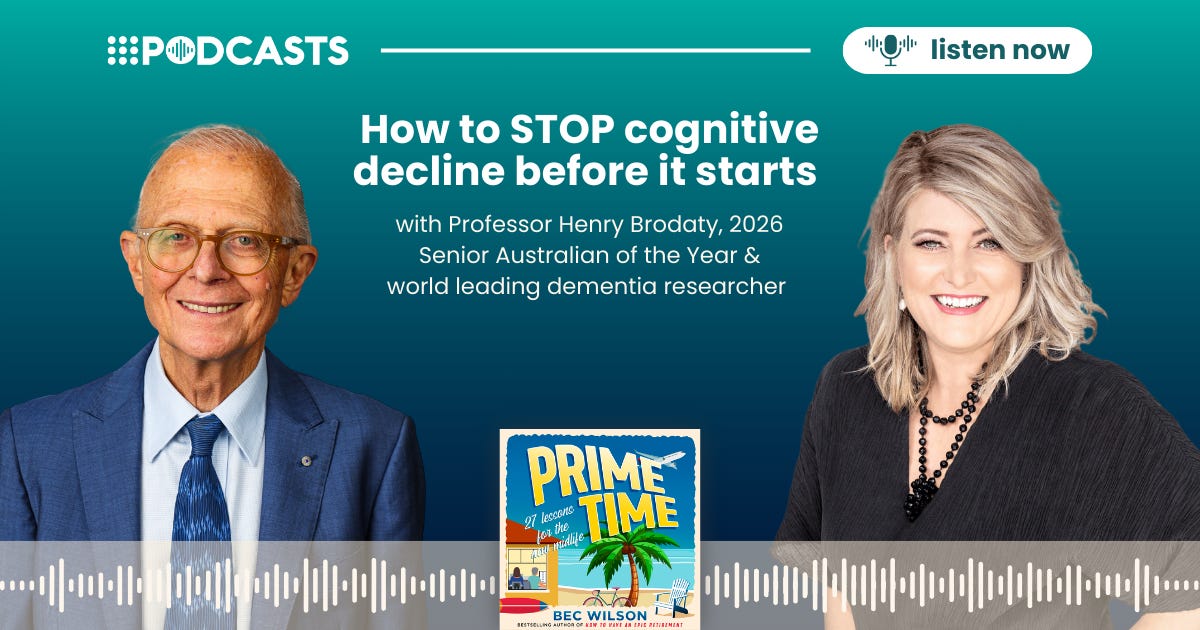
Is cognitive decline inevitable as we age, or is there actually something we can do about it?
That’s the question I wanted to explore in this week’s episode of Prime Time. Dementia and memory loss sit right at the top of the fear list for people over 50, and yet so much of what we hear is either alarmist or hopeless.
So I invited one of the world’s leading experts to the show.
I’m joined by Professor Henry Brodaty - 2026 Senior Australian of the Year, Professor of Ageing and Mental Health at UNSW Sydney, and Co-Director of the Centre for Healthy Brain Ageing. Henry has spent decades researching dementia, cognitive decline and, most importantly, what actually helps protect our brains as we age.
We discuss what’s within our control, what really matters for brain health, and why it’s never too early to start looking after your mind.
You can find out more about Henry’s work here.
LISTEN TO THIS EPISODE OF THE PODCAST HERE:
Highlights of the conversation:
Cognitive decline isn’t inevitable: Henry explains why dementia risk increases with age, but also why a large proportion of risk is modifiable, meaning there are real actions we can take to delay or reduce cognitive decline.
Up to 45% of dementia risk is linked to lifestyle factors: We unpack the biggest contributors to brain health, including blood pressure, physical activity, education, mental stimulation, hearing loss, social connection and depression.
What’s good for your heart is good for your brain: Managing cardiovascular health isn’t just about preventing heart disease, it’s foundational for protecting cognitive function too.
Why hearing loss matters more than most people realise: Henry shares why untreated hearing loss significantly increases dementia risk, and how hearing aids can actually reduce that risk by keeping the brain engaged and socially connected.
Exercise, strength and movement really matter: We talk about why regular physical activity, including strength training, not just walking, plays a critical role in maintaining brain health as we age.
It’s never too early — and never too late: Whether you’re in your 40s, 60s or even later, Henry explains why starting now still makes a difference, and why earlier action simply compounds the benefits.
Three non-negotiables for brain health: Henry shares the daily habits he believes matter most and why trying to do everything isn’t the goal. The key is choosing what’s most relevant for you and doing it consistently.
A hopeful message for the future: We talk about how delaying dementia onset, even by a single year, could dramatically reduce the number of people affected, and why there is far more light ahead than most people realise.
Last week, we opened up the conversation about retirement fears. After asking the Epic Retirement Club community to name what they were most afraid of, the answers came in fast.
In part one, we tackled the first three fears: running out of money, running out of time and health, and the loss of identity. This week, we’re back with part two to explore three more fears that came through loud and clear:
The fear of spending money after a lifetime of saving,
The fear of the rules changing,
And the quiet, creeping fear of ending up alone.
Once again, we’ll talk through why these fears are so common and how each one could be managed with practical advice.
LISTEN TO THIS EPISODE OF THE PODCAST HERE:
Highlights of the conversation:
Creating a ‘pay yourself’ structure can help. Many have internalised the belief that saving equals success, while spending feels indulgent or risky, especially when it involves drawing down from super. Setting up a regular transfer from super to a spending account can reintroduce structure and make spending feel safe, not reckless.
Guardrails, not guesswork. A simple system to review your drawdown rate annually can help build confidence and adjust your retirement spending plan to suit market shifts and personal needs.
You can’t control future policies, but you can build resilience. That includes keeping buffers in your plan, reviewing your risk exposure, and staying adaptable rather than expecting certainty.
Retirement isn’t just financial, it’s social. The fear of being alone, particularly after losing a partner or leaving the workforce, is often under-acknowledged, and so building habits of regular contact, like weekly clubs or scheduled outings, creates the kind of structure work once provided.
Don’t wait until loneliness sets in to act. Investing in relationships, activities, and routines now can protect your wellbeing, emotionally and cognitively, in the years to come.
From Bec’s Desk
What a buzz to hear Dr Henry Brodaty, our Senior Australian of the Year, tell his story in his own words. And what an inspiration he is. The sheer scale of what he’s built, the funding he’s secured, the programs and organisations he’s created… all focused on helping us age better. It’s purposeful work at the highest level.
I have to say, it’s been quietly motivating hearing his story.
Off the back of that conversation, I’ve been doubling down on my own health reset. Or let’s be honest, a complete overhaul of my regime and rhythms so my 80 year old self is proud of me at 50. And I’m starting to feel it with more strength, proper abs, stronger legs and a general sense of wellbeing that’s hard to describe but very real.
What I’m most pleased about? I’m making it work around travel. Instead of letting flights and airports derail me, I’m squeezing sessions in at odd times if I know I’m heading away. Even the protein mission is holding up. It’s not always glamorous when the airport menu is wall-to-wall sandwiches and bread rolls, but I’m finding a way. Salads plus protein and yoghurt have become my new go-tos. Everything feels fresher, cleaner and stronger. This is a marathon not a sprint - so if you’re with me smile, we got years of this!
Now, I’m curious… For our Prime Time listeners, I would like to know if you would you be interested in taking a Prime Time education program focused on money, work, health and happiness?
And here’s the bigger question: could you get your workplace to pay for it as part of professional development or wellbeing?
We’d genuinely love your thoughts. Hit reply and tell us what you think too.
Now, back to it, only two more day’s til Saturday! Happy listening
Cheers, Bec